By Jonathan Gardner, Construction Equipment Product Manager, Kubota Canada
It’s mid-afternoon on a busy urban jobsite. A compact track loader is working in a confined space with multiple crews nearby. The operator is focused on material movement in front of the machine, but someone is repositioning out of sight. In construction, the gap between “out of sight” and “collision” closes in seconds.
Every jobsite manager knows the reality: operator discipline and training are essential. But the machine they’re operating either supports safe operation or it doesn’t. When equipment is engineered with human factors in mind, including sightline limitations, fatigue and varying experience levels, it becomes an active partner in jobsite safety.
Visibility
Visibility is fundamental to safe operation, particularly on tight residential sites, around structures or on busy jobsites where crews and equipment are moving nearby. While the compact nature of a compact track loader (CTL) is an operational advantage, limited sightlines can make it difficult for operators to spot people, equipment and hazards developing around the work area.
Thoughtful CTL engineering addresses this challenge through cab sightlines and rear-view camera systems that give operators a more complete picture of their surroundings. Monitor placement should sit naturally in the operator’s line of sight, allowing them to check camera feeds while keeping their attention on the work area ahead.
Real-world jobsite conditions matter just as much as the technology itself. Dust, rain, glare and variable lighting can compromise camera clarity or make displays hard to read. When evaluating a machine, camera performance and display legibility in actual jobsite conditions are critical to helping operators identify hazards earlier.
Ergonomics

After hours of material movement and repetitive tasks, fatigue sets in. How the operator interfaces with the machine directly affects performance and decision-making as the day wears on.
In a CTL, intuitive control positioning, such as joysticks that sit naturally in the operator’s working zone rather than requiring awkward reaches, can help reduce fatigue. Similarly, real-time feedback through machine monitors helps operators understand what the machine is doing and make informed decisions throughout the workday.
A dashboard that displays load pressure on the bucket tells an operator when they’re approaching limits, an RPM gauge helps them understand when to ease off aggressive digging, and ride-control feedback shows whether the material is secure during transport. This constant information loop supports confident operation and reduces the hesitation or overcompensation that creates inefficiency or safety issues.
Built-in safeguards

Compact track loaders are engineered for specific lift capacities, load moments and stability margins. Load monitoring, automatic stabilization, and ride-control technologies can help operators work within those engineered limits.
Consider a backyard renovation where multiple attachments are in play: a bucket for excavation, a grapple for material handling, a grading tool for site prep. Each attachment has different load characteristics and stability requirements. Modern CTLs allow fleet managers to configure attachment-specific limits, so the machine guides operators toward safe practices for each task automatically. Software lockouts restricting RPM, limiting flow rates or disabling aggressive modes keep operators within engineered parameters all day.
Working within these limits can reduce operator uncertainty and support more consistent performance throughout the workday.
Maintenance accessibility
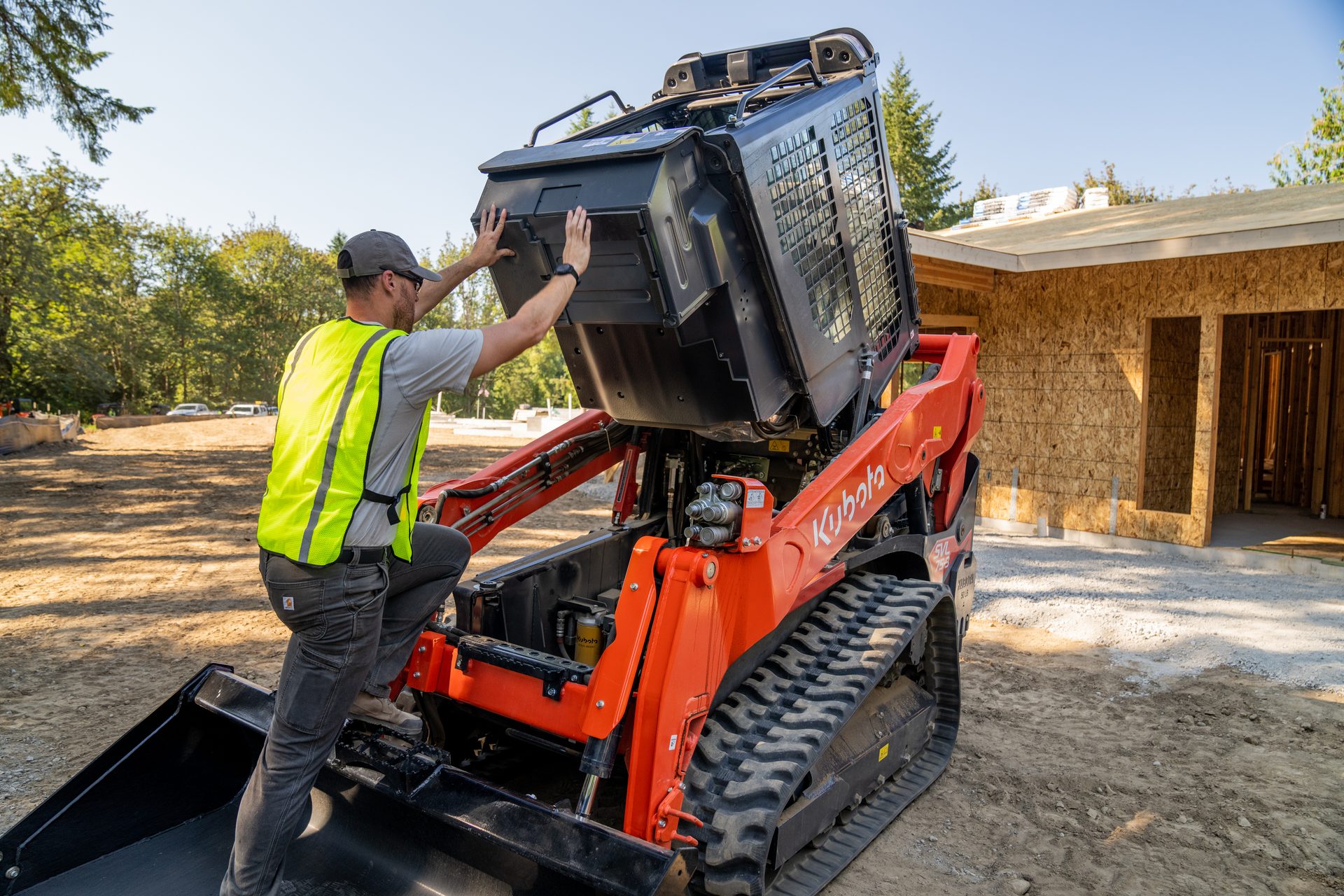
Smart equipment design extends beyond the operator’s cab. Easy access to critical components can make maintenance simpler and safer. A cab that tilts without having to lift the arm provides access to hydraulic pumps, valves, lines and the hydraulic tank, while accessible grease points and pre-cleaners can further simplify routine service.
This accessibility matters for safety too. Making routine service easier helps crews keep equipment maintained and operating predictably, reducing the potential for unexpected issues on the jobsite.
Experience level
Equipment designed for intuitive operation can also support crews with varying experience levels. For newer operators, clear monitor displays, machine feedback and predictable controls can make the learning curve more manageable.
These tools don’t replace training or sound judgment but can reinforce them by providing useful feedback as operators build familiarity with the machine. Experienced operators can benefit from the same information and predictable machine response.
What to evaluate when selecting a CTL
When choosing a compact track loader for your crew, three factors matter most:
- Visibility systems: Assess rear-view camera placement and cab sightlines. Can operators easily see the display while maintaining awareness of the jobsite around them? Consider how the system performs under real jobsite conditions.
- Control feel and feedback: Do the controls feel intuitive, and can operators easily see important machine information without strain? Awkward controls or displays aren’t likely to become less problematic after purchase.
- Built-in safeguards and maintenance access: Consider features that support predictable machine operation as well as ease of service. Look at how easily operators or technicians can access routine maintenance areas and major components.
When safety is engineered into the machine from conception, the benefits extend across the jobsite. Operators can work more confidently, equipment can perform more predictably and crews are better positioned to work safely and efficiently.
That’s the difference between treating safety as a feature added later and making it a foundational design philosophy. When operators and engineering work together to support safe, efficient operation, contractors can build a safer, more reliable operation from the ground up.