From machine selection to maintenance, here are five ways to get the most productivity from your small articulated loader
By Ryan Anderson, Product Manager, Subcompact Equipment, Case Construction Equipment
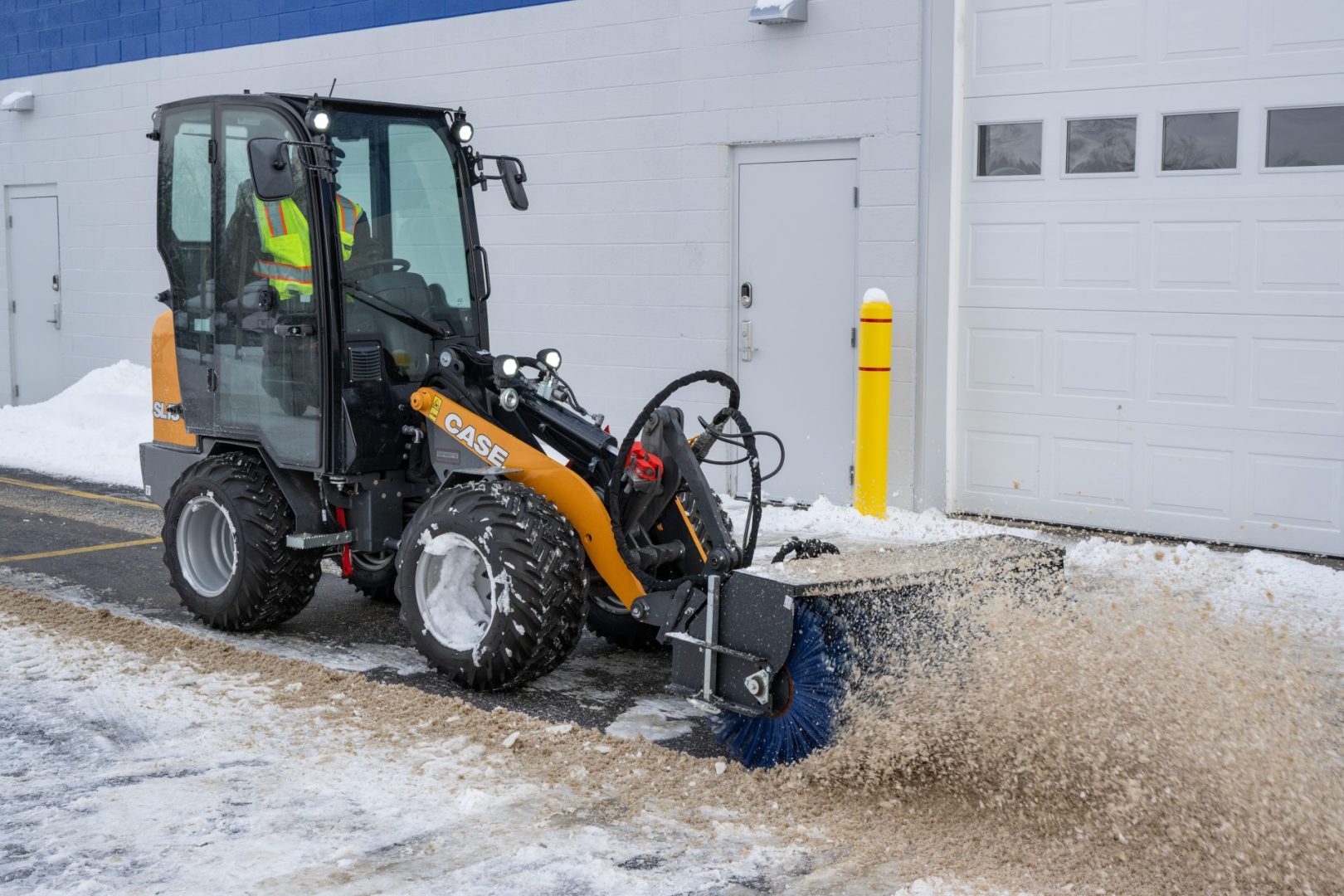
Snow season can turn a small articulated loader (SAL) into one of the hardest-working machines in the fleet.
Winter performance starts with the right setup and operating approach. Tight spaces, low visibility and freezing temperatures can test traction, attachment power and reliability in ways that summer conditions do not.
Whether you already run an SAL or you’re weighing a purchase for snow removal, knowing what features to look for and adopting a few smart operating habits can help you clear more snow with less strain.
Here are five ways to get the most from a small articulated loader before and after the snow starts to fall.
Match your machine and attachments to the job

Snow removal performance begins with having the right machine and attachment setup.
If you’re doing mostly light residential work, a small frame (typically less than 1,150 kg), narrow working width and small tires let you move easily along sidewalks and through tight residential spaces.
For larger commercial jobs or areas that see heavy snowfall, you’ll want more hydraulic power behind your attachments.
An auxiliary hydraulic option, such as a tandem pump that dedicates flow to the attachment, prevents parasitic loss from the drive system and keeps consistent power going to your broom or snow blower.
Attachment versatility matters too. Look for a machine with a common industry interface (CII) coupler that can connect universally to any brand’s attachments. If you’ve already invested in snow tools, a CII coupler means you won’t have to replace them when you add a new machine.
Take advantage of articulation

Snow work often requires proximity to walls, curbs or other obstacles. This is where an SAL’s manoeuvrability pays off.
Choosing an SAL with a rear operator position and front articulation will give you a tighter turn radius compared to a centre-mounted cab design, letting you plow closer to walls and edges in confined areas. It also gives you clearer sightlines around the entire machine, which can be crucial in snowy, low-visibility conditions.
This setup also offers some practical advantages during snow work: a rear-mounted cab acts as a counterweight that balances the machine when lifting heavy snow, and the flatter deck makes it easier to enter and exit the machine in icy conditions.

Use oscillation
Loaders with oscillation functionality allow the front section of the machine to pivot while in motion, providing more stability and keeping all four tires in contact with the ground. That translates directly to better traction and more control in the snow.
When you drive a V-plow or snow blade over drifts or uneven ground, oscillation helps keep the attachment level and in continuous contact with the surface. By contrast, encountering an obstacle with a rigid frame can cause a front wheel to lift and lose traction, putting uneven pressure on one side of the attachment and risking damage.
Keep in mind that some tasks still call for a rigid frame, especially during landscaping season, so having an oscillation lockout option is beneficial so operators can turn off oscillation when necessary.
Comfort, control and safety
Operator comfort and confidence can equate to more productivity, especially during long shifts in cold, low-visibility conditions.
An enclosed cab with a heater can go a long way toward keeping operators alert on the job. Beyond the enclosure, choose a machine with bright lights and strobes and durable windshield wipers to improve visibility and safety in snow and nighttime work.
Controls matter too. Look for controls that prioritize accessibility and ease of use. For example, Case Construction Equipment’s SL15 compact loader uses a press-and-hold trigger on the joystick to control the auxiliary hydraulics, letting the operator manage both the hydraulics and machine movement with one hand without having to reach for a separate lever.
A simple drive function, with forward, neutral and reverse buttons on the joystick and a single throttle pedal, also helps streamline operation. This mirrors familiar automotive-style operation and makes the machine easier to run with winter boots.
Follow good habits
Cold weather can be hard on equipment. But with a few disciplined habits you can make sure your machine performs reliably all winter and doesn’t let you down mid-storm.
First, a few pre-season steps can pay off all winter. Store the machine indoors when possible or install a block heater if you can’t. Inspect tires before winter and consider investing in a backup set of snow tires for the winter months. Finally, check the oil viscosity in your machine to be sure it’s ready for cold-weather operation, especially after summer landscaping work.
When the first storm hits and you’re ready to plow, follow the cold-start procedure. Let the glow plug indicator glow until it shuts off before turning over the engine. And if it doesn’t start on the first try, wait a moment before trying again rather than overcranking on the ignition.
Once the engine is running, resist the urge to get straight to work. Cold components, including cables, are far more vulnerable to failure, so take a few minutes to let it idle and warm up. Then, run slow, simple maneuvers to circulate fluids and let the machine build heat, like warming up before a hard workout.
The multi-season benefits of a compact loader are hard to beat. Selecting the right features up front and following these simple routines before operating will help crews perform at their best when winter conditions are at their worst.