By Matthew McLean, Product Manager – Assist Systems, Chris Connolly, Product Manager – Mid-Size Wheel Loaders, and Justin Zupanc, Compaction Product Manager, Volvo Construction Equipment
The criteria for buying municipal equipment used to be simple: Look at the bid price, check machine specs and choose those that fit the budget. But the operational environment for government fleets and utility contractors has changed. Today, the biggest variable on a jobsite isn’t the equipment — it’s the person sitting in the cab.
The construction industry is facing a massive demographic shift. Data from the National Center for Construction Education and Research (NCCER) shows that about 41 per cent of the current construction workforce is projected to retire by 2031. At the same time, the Associated General Contractors of America reports that 92 per cent of firms are struggling to fill open positions, with 45 per cent reporting project delays because they can’t find qualified help.
For public works directors and utility contractors operating on fixed, multi-year budgets, this labour cliff introduces a lot of risk. When an experienced operator leaves, decades of intuition leave with them. If a new hire takes twice as long to grade a trench or accidentally over-digs a site, budgets take a hit, project schedules slip and taxpayers are left staring at traffic cones for weeks longer than necessary. This is why intuitive, assistive technology for equipment like excavators, wheel loaders and compactors have shifted from a premium add-on to a core procurement priority.
Level the learning curve

Excavation around live utilities is one of the most stressful jobs for a new operator. A simple mistake can tear through a water main, shutting down a neighbourhood and costing thousands in emergency repairs.
Traditional training takes years of seat time, but machine control systems drastically cut that learning curve. Using an in-cab touchscreen interface, like Volvo’s integrated Co-Pilot, new operators get real-time, visual guidance directly in their line of sight.
Check out our contractor guides and resources here
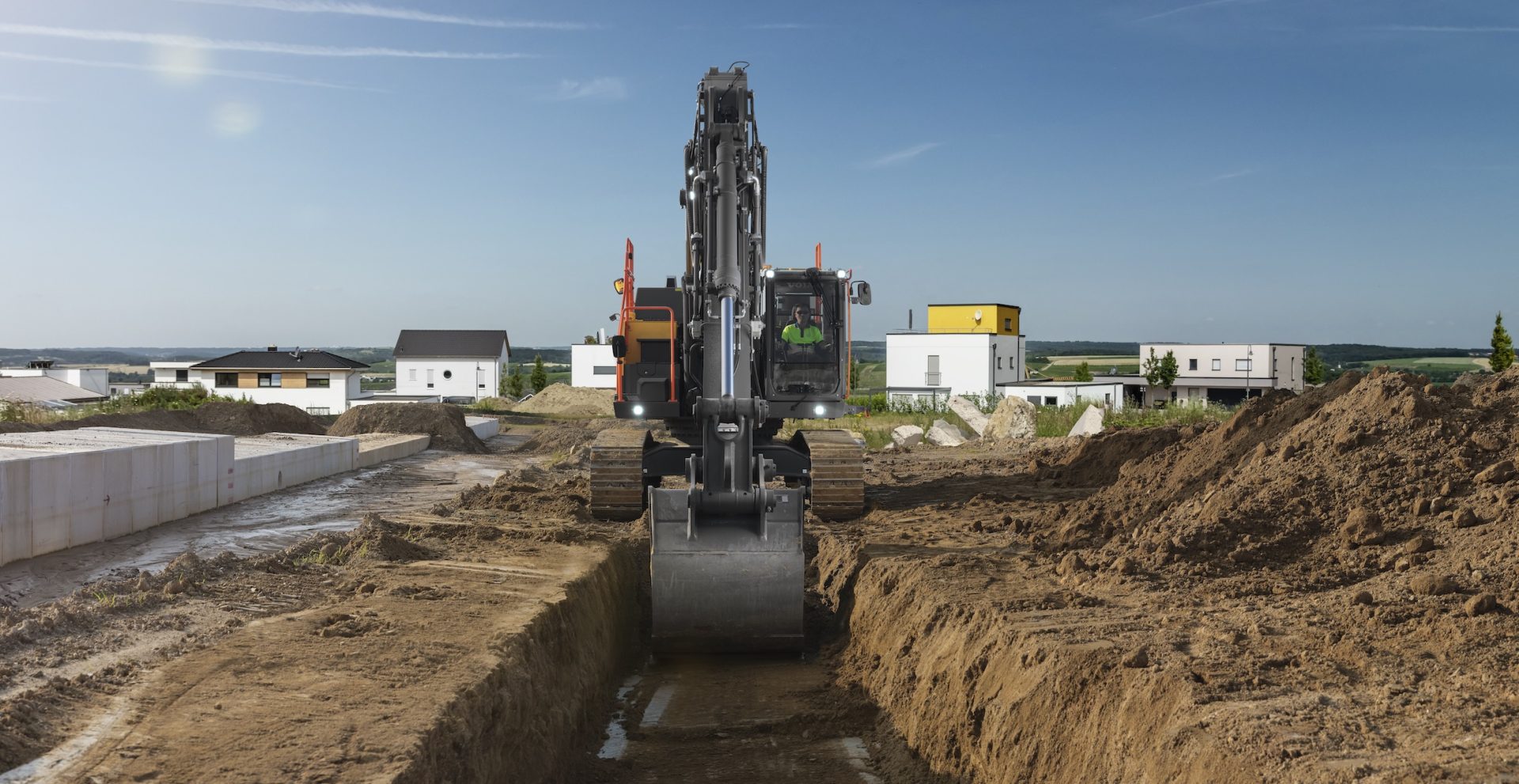
When you pair this with a quality machine control system, the machine actively protects the operator from making mistakes. For example, Volvo Active Control for excavators automatically adjusts the boom and bucket movements to maintain the correct grade and prevents the operator from digging past the target depth. Instead of constantly stopping to manually check grade or worrying about over-digging, a less experienced operator can cut a clean, accurate trench on the first pass. Systems like this eliminate the need for costly rework, reduce the amount of extra bedding material needed and keep projects on schedule.
While advanced grade control tools minimize the risk of utility strikes and aid in mapping, it is critical to understand exactly what the technology can and cannot do. A grade control tool does not actively scan or locate unidentified utilities beneath the ground. But it does act as a digital safety net using pre-loaded data and user-defined parameters to aid in three key areas:
- Boundary limits: Operators can program exact depth limits and swing fences to block the excavator from entering zones where known utilities are buried. The system provides audible and visual warnings or automatically halts movement to keep the bucket from going beneath a safe depth.
- 3D in-field design: Instead of relying on traditional survey stakes, operators can draw trenches, step systems and layered trenches directly on the screen using centimetre-accurate reference points.
- Site awareness: Integration with 3D machine control software lets operations upload detailed utility maps directly into the cab, keeping the operator aware of the exact coordinates of buried cables and pipes relative to the bucket.
In using these tools, operations should always use standard underground safety protocols prior to digging.
Take the guesswork out of repetitive tasks

When your municipality handles seasonal materials like sand, gravel or salt, wheel loaders become some of the most heavily used machines in your fleet. However, keeping a steady pace while loading trucks without spilling material or overloading axles requires finesse.
Features like auto bucket fill change how a new operator handles these repetitive cycles. With the push of a button, the system automates bucket movements to get a full load every single time, regardless of the material density.
When this is combined with in-cab assist programs, the machine handles the onboard weighing automatically. The operator sees exactly how much material is in the bucket before dumping it into a trailer. In a municipal yard or on a utility job, this prevents the bottleneck of sending a truck out to a public highway overweight, only to have it return to the yard to dump off the excess. It keeps the floor clear, speeds up cycle times and ensures that even a rookie operator can hit production targets without burning unnecessary fuel or straining the hydraulics.
Build better habits
Even after basic training, new operators often struggle with efficiency quirks that waste fuel and cause unnecessary wear on the machine. Things like excessive idling or spinning the tires in a pile can eventually become big issues. To fix this, many modern machines now feature built-in, real-time coaching apps right on the cab screen. Volvo’s Operator Coaching app for loaders provides instant feedback on operator behaviour.
Combined with the app’s real-time, on-screen guidance, this helps operators make better decisions behind the controls.
These digital coaching systems act like a co-pilot, monitoring how the machine is being handled and giving immediate, practical feedback to the operator. If they’re braking too hard or pumping the throttle unnecessarily, the screen prompts them with a quick tip on how to adjust.
This on-the-job guidance helps new hires correct bad habits immediately, allowing them to work with the smoothness and efficiency of a veteran operator much faster than traditional training allows.
Quality from the base up
Whether a city crew is patching a water main cutout or a contractor is rebuilding an entire roadway, compaction is where many infrastructure projects fail prematurely.
If the soil or asphalt isn’t compacted correctly, the road sinks, potholes form and the city ends up paying more to fix the exact same stretch of road two seasons later.
Compaction has traditionally relied on operator feel and counting passes in their head. Machine control systems remove that guesswork by tracking every pass on the in-cab monitor.
The screen displays a colour-coded map showing exactly where the roller has been and which areas still need another pass.
For a newer operator, this visual map provides immediate, real-time feedback on density across the compacted surface.
They don’t waste time making unnecessary passes over areas that are already finished, and more importantly, they don’t leave soft spots behind.
Protect your city’s bottom line and reputation
When a municipality contracts out utility work, that contractor’s performance directly impacts the city’s reputation. Delays, blocked intersections and torn-up streets frustrate the public. By prioritizing equipment with assistive tech — whether in their own municipal fleets or when vetting contracted partners — cities protect both their budgets and their communities.
It’s important to mention that features like these don’t take over for the operator; they just act as a safety net so that a long day of repetitive work doesn’t turn into a costly mistake that delays the project.
These days, experienced operators are hard to find, so investing in machines that make daily tasks easier and more accurate is a practical way to deliver infrastructure projects on time and on budget.