
By Eric Yeomans, Product Manager for Large Wheel Loaders at Volvo Construction Equipment
Quarry and aggregates operations rely on a series of coordinated steps to transform raw rock into valuable materials. The crusher is a central part of this process, and how you feed it matters significantly to your success.
For this critical task, you should think carefully about whether to use a wheel loader or an excavator — or perhaps both. There’s no one-size-fits-all solution; the right tool depends on the material, the site and your production goals.
This loading machine selection is important because an inconsistent feed can lead to slowdowns or even shutdowns. A steady feed ensures consistent particle size, which is essential for meeting strict specifications for applications like road construction and concrete production. Plus, you need to feed your crusher according to its capacity to reduce uneven wear on components and prevent issues like bridging, where material blocks the inlet and can cause damage.
Three key factors
When selecting the right machine for your operation, be sure to consider:
- Material type: The properties of the material — rock versus sand, large versus small, hard versus soft and so on — will affect machine performance. Large, abrasive or hard materials require a heavy-duty machine like a large wheel loader or hydraulic excavator, whereas softer, more varied materials might suit a smaller-class wheel loader.
- Site layout and mobility: Your crusher’s location, haul distances, stockpile setup and available turning space are all important considerations. For instance, static crushers are often paired with larger, more robust loading equipment like excavators to handle continuous high-volume feeding. On the other hand, mobile crushers need smaller, more agile loaders for quick relocation.
- Production targets: These targets, which can range from high-volume continuous feeding to smaller, variable output requirements, should steer your decision. High-volume sites with large material piles and fast cycles favour a wheel loader, while deep digging and accurate placement require the power and speed of an excavator.
Wheel loader benefits

Wheel loaders are known for their mobility and versatility, helping them excel at tasks like stockpiling and load-and-carry operations. They offer faster cycle times for short distances and can easily handle multiple tasks on a jobsite.
However, wheel loaders have some limitations. When it comes to placing material precisely into hoppers, they have shorter reach and less control than an excavator. They can also be less effective for continuous feeding and may burn more fuel. Wheel loaders are best designed to scoop and move large, loose volumes quickly from a pile to the crusher. The productivity of a wheel loader hinges on its large bucket capacity and its ability to handle bulky materials in fewer cycles than an excavator.
Excavator benefits

Excavators provide superior reach and control for precisely placing material into a hopper. They’re also a better choice for sites with limited manoeuvring space and are well-suited for continuous feeding to maintain steady crusher operation. While wheel loaders are made for moving large, loose volumes, excavators offer more precision and reach for digging from a specific source. The cycle time of an excavator is also superior for digging tasks.
RELATED: Volvo CE helps power the first all-electric deconstruction site
The primary limitations of excavators are mobility and flexibility. They aren’t as ambulatory as loaders and may require a dedicated support machine (like a truck or loader) for stockpiling and hauling materials.
Tech and operator skill
Today’s technology plays a significant role in optimizing crusher loading. Telematics is a great example, providing real-time data for remote monitoring of machine health, utilization and operational parameters. This data allows you to better manage production, track operator performance, improve maintenance scheduling and make smarter decisions about equipment deployment.
Matching a machine’s size and bucket capacity to the crusher is a common challenge. Oversizing equipment can lead to excessive wear and downtime, while undersizing equipment can increase cycle times and costs. It’s also crucial to consider your operator’s skill level. A skilled operator can monitor material conditions and machine performance in real time, adjusting feed rates and minimizing downtime. A less-experienced operator may need more training or assistive tech to achieve similar results.
Tips for efficient loading

Before material is fed into a crusher, it should be prepared by removing oversized pieces, fines (or quarry dust) and foreign objects like metal and wood. To maintain a consistent and controlled feed rate, the operator should feed material directly into the centre and ensure that the crushing chamber is kept full. Surge piles or bins also help regulate material flow.
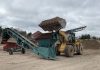
It’s not uncommon to use both excavators and wheel loaders to feed crushers because they can complement each other for different tasks on the same site. For example, the visibility from an excavator’s high-rise cab is helpful for primary loading from stockpiles or demolition debris. Meanwhile, a wheel loader can handle the load-and-carry functions, moving material from stock or surge piles directly into the crusher.
In the end, the right choice is about testing and tracking performance to make decisions that align with your specific material, site and production goals. When you take the time to get this right, you can expect to see increased productivity and lower costs per ton across your entire operation.