Allu plans to introduce a new bucket to help demolition and recycling contractors process concrete and brick rubble on tight jobsites.
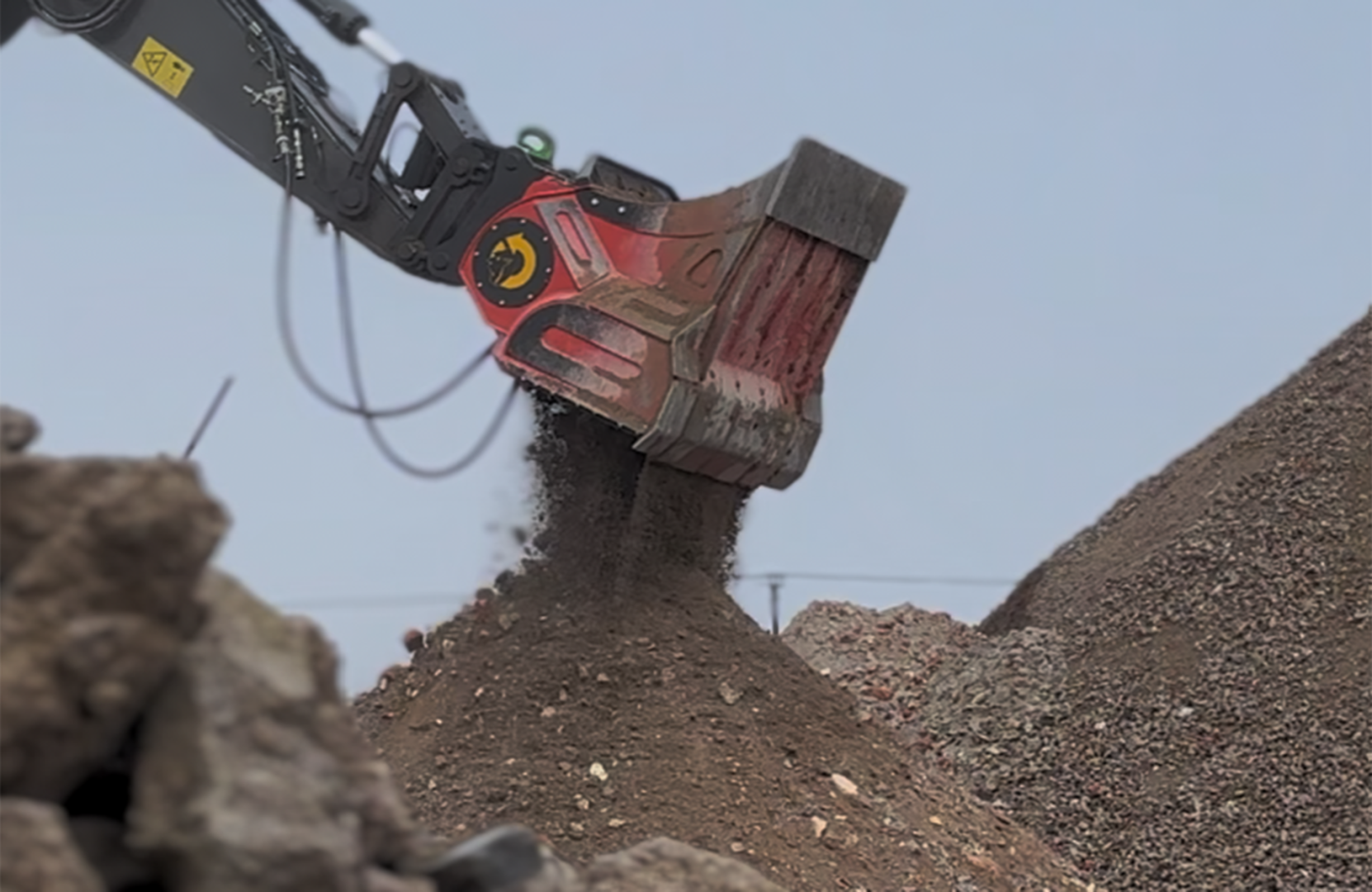
At ConExpo, Allu offered a sneak peek at its screening and concrete bucket for rebar-contaminated demolition rubble. The new excavator-mounted attachment is designed to crush demolition rubble on-site, including material with rebar that typically causes slowdowns and rejections.
“Contractors don’t need another machine to manage on a crowded jobsite; they need a practical way to turn rubble into usable material with the excavator they already have,” said Antti Rautamies, Research and Development Project Manager at Allu.
“This bucket is built for the real world: fines-heavy material streams, tight spaces and reinforced concrete that doesn’t arrive clean.”
The Allu Concrete Bucket is designed for excavators in the 25-to-45-ton class and crushes demolition rubble such as concrete, bricks and asphalt (RAP).
It targets jobsites where bringing in a separate mobile crusher is inefficient, or not possible, helping contractors process material right where it’s generated.
The bucket can also be used to increase a mobile crusher’s capacity by pre-crushing and feeding with the same attachment at demolition or recycling sites.
Handles rebar

Steel in the feed is one of the fastest ways to ruin productivity. The Allu Concrete Bucket is designed to handle steel and rebar embedded in the material, helping keep the job moving and reducing stop-and-clear time that can halt production on demolition work.
“Crushing concrete, which also can include rebar, gives a huge opportunity to do quick recycling of material without bringing in bigger equipment to a demolition site,” said Allu CEO Peter Grönholm.
As well, the bucket features a changeable counter blade setup that supports output sizes up to 50 mm and up to 100 mm. This allows crews to aim for the right balance of fragment size and productivity without changing the whole flow of the job.
The bucket is designed for a processing capability of up to 100 tonnes per hour with high fines content and a maximum feed size of 30 cm.
Allu designed the bucket to ensure wear part changes are straightforward. The bucket includes a heavy-duty frame structure with a 40 mm cutting edge and 30 mm side cutters, which are designed to withstand breakout forces of excavators up to 45 tons.
The crushing drums and blades are still under the final research and development work, but Allu said many successful tests have been conducted in real-life surroundings, utilizing multiple innovative drum and blade configurations.
A counter blade structure forms the crushing chamber, and the bucket uses two alternative rotating directions to support a continuously effective crushing operation while screening fines quickly through the bucket.
The bucket will require hydraulic flow of 190 to 315 litres per minute and 80 to 134 hp typical operating power.
Fuel consumption with a 40-ton excavator equipped with the bucket is noted at about 30 litres per hour.
The Allu Concrete Bucket is still under final testing and the first model for 25-to-40-ton excavators will be available in the market in 2026.
“The idea is, when we get more experience, we plan to widen the range,” Grönholm said.