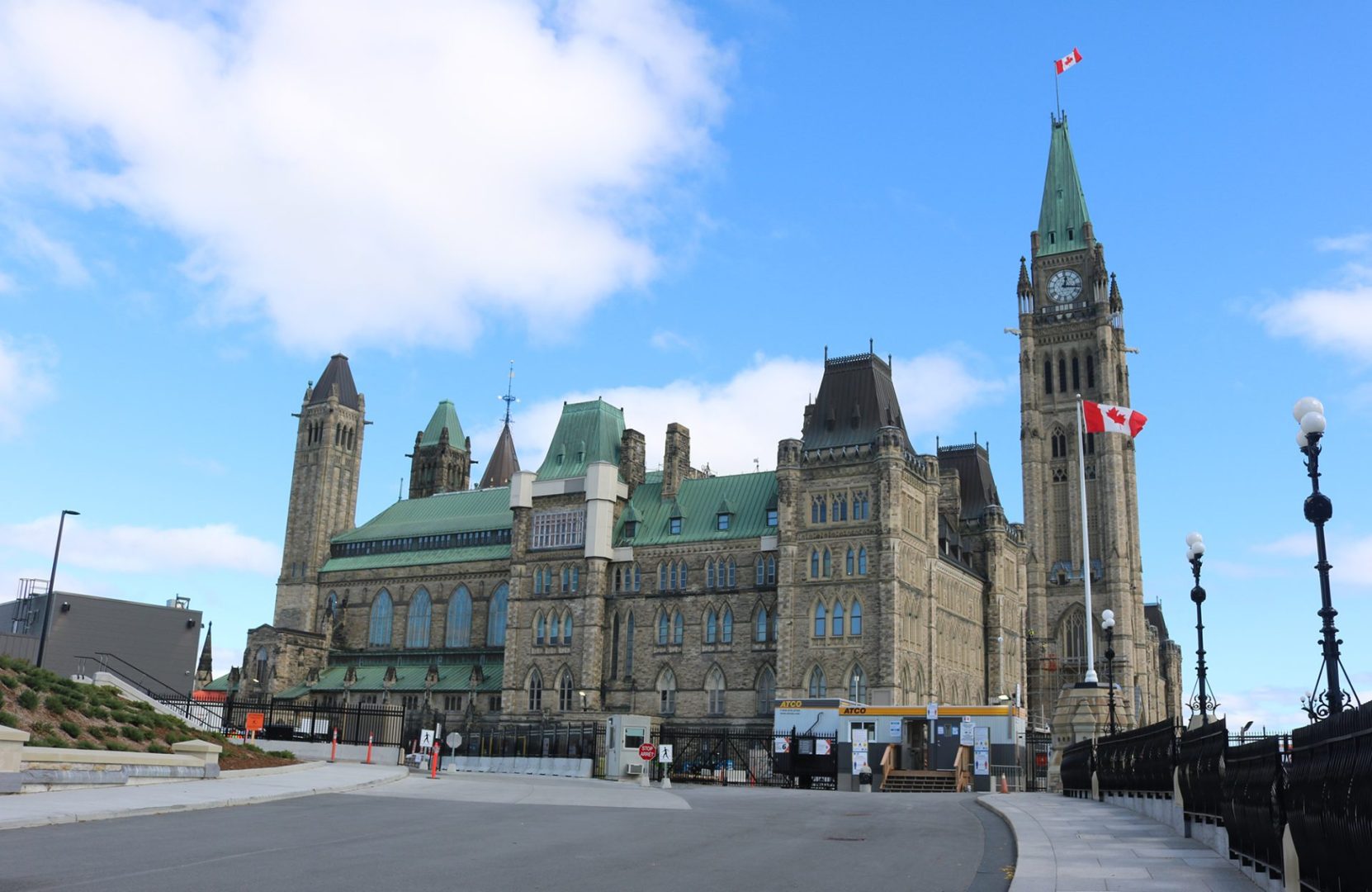
More than 20 equipment manufacturing leaders from across Canada returned to Parliament Hill for the Association of Equipment Manufacturers’ (AEM) 2026 Ottawa Hill Day.
At the third annual event, AEM members participated in more than 25 meetings with ministers, Members of Parliament, and other policymakers to discuss the state of the industry and advance solutions to Canada’s trade, workforce, and infrastructure challenges.
With ongoing trade uncertainty and rising costs, participants urged policymakers to strengthen manufacturing competitiveness, unlock investment, and future-proof Canada’s economy.
The event helped ensure that the industry’s priorities were heard directly by policymakers and presented a unified case for policies that support investment, innovation and a more resilient Canadian economy.
RELATED: AEM applauds manufacturing assistance in the 2026 Ontario budget
“This is Canada’s moment to look inwards and figure out how we can be more competitive as a nation domestically, and how we can invest to juice demand where demand has been taken away in other markets,” said Kip Eideberg, AEM’s Senior Vice-President of Industry and Government Relations.
Participants also highlighted the industry’s significant national footprint. In 2025, Canadian equipment manufacturing generated $54 billion in total output, contributed $24 billion to GDP, and supported 147,000 jobs nationwide.
“Escalating trade tensions and rising costs are placing significant strain on Canadian equipment manufacturers, their workers and the communities they call home,” said Alexandre Mattard-Michaud, AEM’s Director of Government Relations for Canada.
“We were encouraged by our conversations with federal policymakers and look forward to continued dialogue on how to help Canada’s industrial base navigate trade disruption, unlock new business opportunities and reinforce the country’s manufacturing advantage on the global stage.”
Pre-budget comments
Hill Day came as the federal government prepares its fall 2026 budget following the conclusion of pre-budget consultations.
In its budget submission, AEM called on policymakers to provide responsive relief for tariff-impacted businesses, strengthen Canada’s skilled-trades pipeline, support innovation and capital investment as well as improve trade competitiveness through modern infrastructure, streamlined regulation and a renewed 16-year extension of CUSMA.
The Hill Day also followed the recent announcement of the Productivity Mega Deduction, which makes immediate expensing permanent and expands the range of capital investment eligible for accelerated write-offs, including manufacturing equipment.
“Manufacturers need a clear, predictable policy environment to keep investing in Canada, developing technology and supporting the workers building our future,” said Yannick Montagano, President of Kubota Canada and Chair of AEM’s Canadian Advocacy Working Group. “Fair trade rules, a skilled workforce and reliable infrastructure are connected priorities. Progress on each can provide much-needed certainty for our businesses and the industries that rely on our equipment.”
AEM’s 2026 policy requests included:
Strengthening equipment manufacturing in Canada
Executives urged the government to consult closely with manufacturers on trade policy, preserve and strengthen CUSMA and maintain flexibility on retaliatory tariffs.
“We do need to make a deal or long-term commitment with the United States so that we can stabilize and make decisions, because right now we can’t,” said Colin Sellick, President and CEO of Sellick Equipment.
They also called for timely duty remission, including relief for inputs that cannot be sourced competitively outside the United States; industry education on the remission process; and continued support for EDC’s Trade Impact Program to help exporters manage costs and diversify into new markets.
Supporting workforce development
Equipment manufacturers highlighted workforce shortages and called for more investment in training programs for the skilled technicians needed to service sophisticated off-road equipment. AEM’s priorities include ensuring Team Canada Strong addresses industry needs, engaging manufacturers in the Advanced Manufacturing Workforce Alliance and the planned Housing & Construction Workforce Alliance and supporting industry-led training solutions that government can help scale.
“The workforce shortage remains one of the industry’s biggest challenges,” said Christian Stang, Vice-President of GINCOR Werx. “Capital is easy to find. People are not. Trying to find qualified people to work on our assembly lines is difficult. … And so when you need to rejig production lines, it causes a lot of business disruption.”
Modernizing Canada’s trade-enabling infrastructure
Equipment manufacturers urged the government to fully utilize the $5-billion Trade Diversification Corridors Fund to strengthen corridors, ports and rail lines; expedite federal and provincial permitting for nationally significant projects and prioritize critical-minerals development and nation-building infrastructure. Participants also offered to contribute industry expertise as government develops major project, trade and transportation legislation.
Streamlining regulatory compliance
Equipment manufacturers also called for coordinated action with provinces and territories to reduce unnecessary regulatory burdens, clear service standards for permitting and project reviews, as well as outcome-based, technologically neutral requirements developed in consultation with industry. Strong safety, environmental and labour protections remain essential, alongside approvals that are more efficient, predictable and timely.
“One thing we talk a lot about is putting the regulations and requirements to build mines and major infrastructure projects to a point where companies can actually be successful is critical,” said Robert Maze, president and CEO of Supreme International. “That’s something the federal government can control. Right now, it’s not working.”